Catholic afterlife cosmology
The Greatest Beer Run Ever: A Memoir of Friendship, Loyalty, and WarCatholic afterlife cosmology is not a distant doctrine in John McGahern’s memoir but a map of the world he inhabits as a child: heaven lies beyond the sun, hell beneath the earth, and purgatory between them. The map is taught in prayer and ritual, made intimate by Susan McGahern’s descriptions, and tested against a child’s desire to reach heaven without passing through death. Its promises and terrors give religious form to his early love for his mother, while the memoir’s adult perspective reveals both the comfort and the limits of that certainty.
A geography of the worlds to come
Religion organizes ordinary time before it organizes the child’s ideas of eternity. Prayers are said each morning; at noon, the Angelus bell stops work and conversation in fields, houses, schools, shops, and the street; and each day ends with the Rosary. The afterlife is consequently not treated as remote speculation. Heaven, hell, purgatory, and limbo are spoken of almost daily as the family’s future reality, more immediate to the children than distant countries such as America or Australia.
Susan McGahern gives heaven a physical clarity. It is in the sky, beyond the sun and its gate, with thrones and mansions for God, the Virgin Mary, angels, and saints; beyond them lie the gardens of paradise. There, time ceases, and joy lasts eternally in union with the mind of God. This is also a family hope: Susan prays that her children will live there together with God. The vision joins theology to the intimate language of home, and makes eternity imaginable as a life in which the family remains together.
The other destinations are described with an equally concrete, though more fearful, geography. Hell lies in the earth’s depths, where eternal fire punishes souls deprived of the sight of God. At its entrance, a river separates the dead from their destination: the souls arrive naked and weeping from the Judgment Seat, each carrying a single coin for the boatman. Purgatory stands between hell and heaven. Its descriptions are less definite, perhaps because the family expects to pass through it; its inhabitants must be purified in flame until they are white as snow before joining the saints.
Limbo occupies a quieter corner of this map. Unbaptized children sleep there for eternity without consciousness or pain. Because baptism has closed that destination to him, John McGahern sometimes imagines that he might have preferred it to the prospect of hell or the long purifications of purgatory. He even hopes that some essential rite may have been omitted at his baptism, but cannot tell his mother. The wish gives the doctrinal system a child’s unsettling irony: a place defined by exclusion can appear merciful beside the punishments and ordeals awaiting the baptized.
The sun, the gate, and the limit of childhood belief
At Easter, Susan McGahern points out the sun and presents its brightness as a sign of Christ’s resurrection. If clouds hide it, she assures the children that it is still dancing behind them. Her teaching makes belief compatible with not seeing: the unseen joy of heaven remains real even when the visible sign disappears.
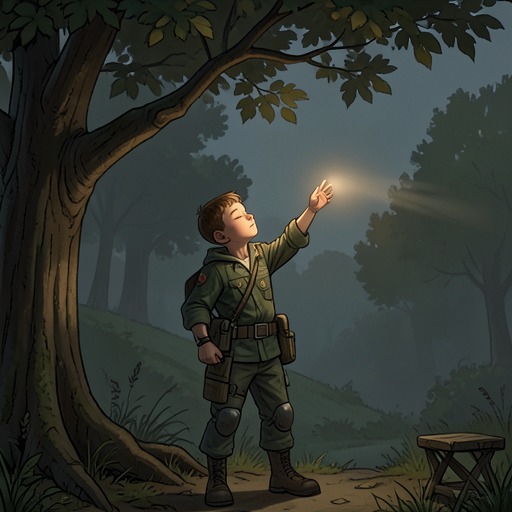
The child turns this lesson into a plan. At evening, when the sun seems close among the whitethorns on the hill behind the house, he thinks he can climb to it and pass through it to heaven’s gate. The ascent through rushes is exhausting; after forcing through a gap in the hedge, he rolls into a dry drain. The sun, which seemed within reach, now appears on another hill, miles away across a plain of wheaten sedge. He falls asleep from exhaustion and wakes in darkness beneath the stars, hearing people call his name. His family scolds him, then responds with laughter and wonder as they learn what he tried to do.
The incident makes the boundary between religious image and physical world palpable. The child has taken his mother’s cosmology literally enough to attempt its route, but the failed climb does not simply disprove the vision. He has not yet understood that reaching heaven requires passing through death. The adult memoir holds both parts of the episode together: the child’s earnest belief, and the painful knowledge that the gate cannot be reached by climbing a hill.
Ritual, prayer, and the life of the church
The afterlife’s place in daily life is sustained by repeated practices as well as by images. At home, after a walk with his mother, the children feed the fire with gathered sticks, eat bread and jam with tea, and kneel in the room’s red glow to say the Rosary. The prayer belongs to an ordinary evening, but its setting joins domestic warmth to sacred devotion. In this world, religious belief is lived through bodies, habits, and shared time.
The church extends that education through a calendar of ceremonies. John McGahern remembers the Stations of the Cross in Lent in a dim church battered by rain and wind, with a few worshippers, altar boys carrying candles and a cross, and a priest moving from station to station. Corpus Christi offers a contrasting public spectacle: rhododendron branches, banners, and roadside altars decorate the village as the Host is carried beneath a gold canopy through a large parish crowd. These ceremonies introduce him, in an impoverished time, to indoor beauty, ornament, sacrament, and mystery. He understands the church as a book through which the story of Christ gives shape and depth to the year, joining suffering to ecstasy.
A folk cure for whooping cough shows another way religion enters bodily experience. During the illness, John McGahern is shut away from his mother for weeks. One cold night, a neighbour brings a jennet, mule, or donkey, and the child is passed beneath the animal three times in the name of the Father, the Son, and the Holy Ghost. He remembers frost on the ground and stars overhead; afterward, he is restored to his mother and to their walks to school. The episode combines a Christian formula with a local ritual, and places religious language within a concrete practice of illness, separation, and reunion.
The afterlife as a promise of reunion
The cosmology becomes most personal in the dream that John McGahern will become a priest. Like Paddy Flanagan, he imagines being ordained, blessing his mother with his newly anointed hands, and living with her in the priest’s house. She will attend Mass and receive communion from him; after she dies, he will remember her in every Mass until they are reunited in heaven. The imagined future gives religious service a particular emotional purpose: it promises a way to remain bound to Susan McGahern beyond her death.
The dream’s authorship remains unresolved. Susan’s friendship with Mrs Flanagan helped it take shape, but John McGahern also enlarges it with his own childhood imagination. Its imagined household includes his mother and himself, but makes no provision for his father or sisters. When Susan asks whom he loves most, he answers that he loves her, and she corrects him: God must come first, even though his answer pleases her. The exchange places personal attachment inside a religious hierarchy without making that attachment any less powerful.
After his mother’s illness and separation from the children, prayer becomes a means of continuing life with her. In an empty church, memories of their life together repeatedly displace his efforts to concentrate on prayer. He pictures her in heaven among Mary, the angels, and the saints, waiting beneath a cloudless sky; yet catechism teaching raises a problem: if she is already in heaven, she has no need of his prayers. He wonders about purgatory too, though he cannot readily imagine her deserving its fire. The cosmology offers him a language for hope, but it cannot remove the uncertainty created by grief.
A first book, and a changing certainty
In retrospect, John McGahern presents the Church as an authority that reached beyond his father’s rule. The ceremonies seemed to represent a truth outside manipulation and bullying, and the church’s account of human equality offered a counterpoint to a household marked by darkness and violence. Religious practice therefore shaped more than expectation about the next world: it also gave the child a different account of order, meaning, and human worth in this one.
The memoir does not leave that childhood certainty untouched. Its descriptions show how completely the afterlife entered the senses and routines of a family, but also how prayer could become tangled with memory, fear, and the wish to keep a loved one. John McGahern later describes his father’s death with conflicting grief, loss, and relief, and leaves judgment to God, or to whatever truth or longing that word may represent. The adult qualification does not erase the earlier cosmology. It shows the distance between being raised inside its vivid map and knowing, later, that belief cannot settle every question of loss.